
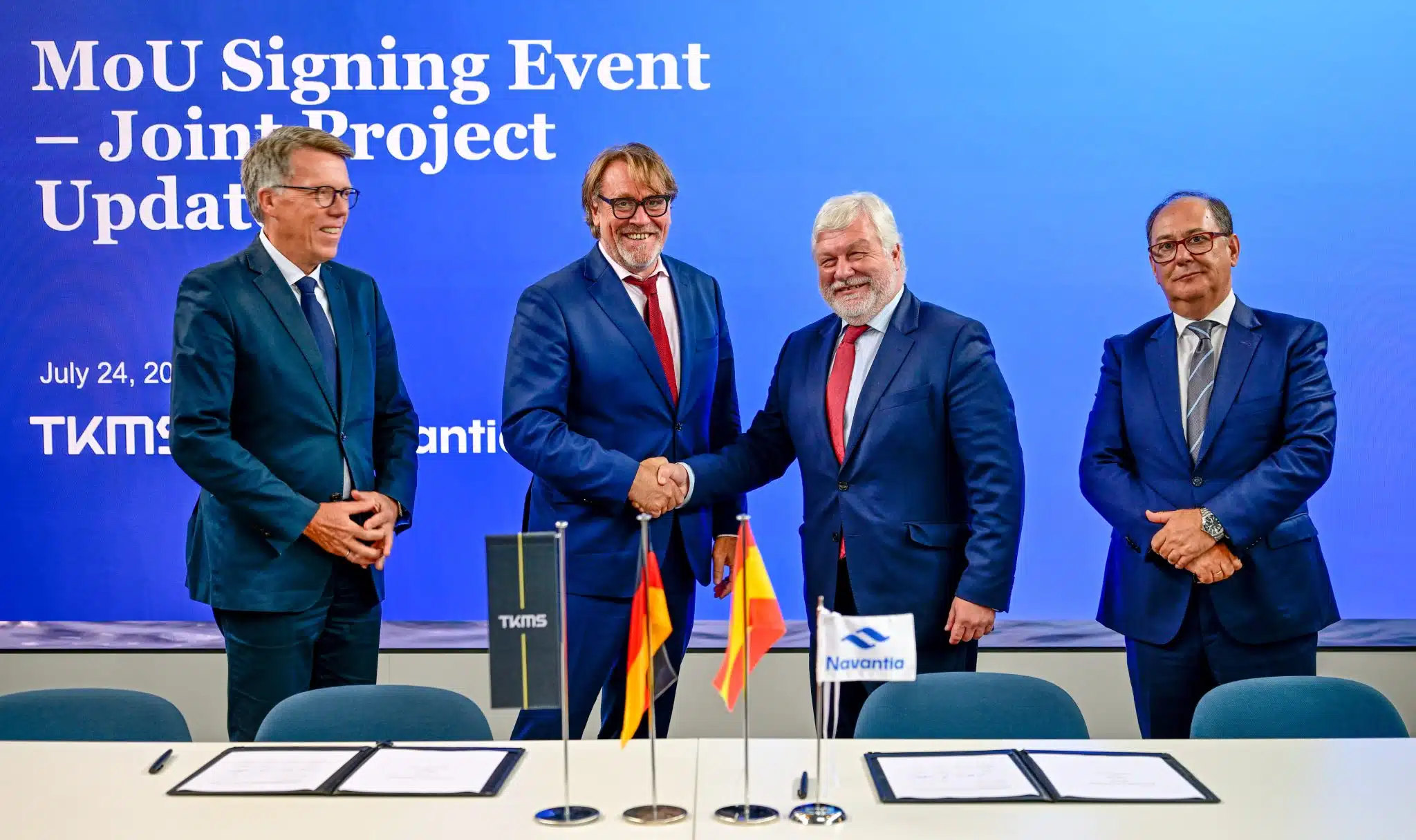
Building significantly on their initial cooperative roadmap established earlier this year, German naval heavyweight Thyssenkrupp Marine Systems (TKMS) and Spanish shipbuilder Navantia have signed a second Memorandum of Understanding to advance their strategic submarine partnership, as reported by Naval News Staff. Following three months of highly productive bilateral discussions, both companies have committed to establishing a formal joint collaboration framework by the end of 2026, aimed at streamlining the production and commercialization of selected future submarine projects.
The newly outlined partnership framework is designed exclusively to target emerging international market opportunities and optimize manufacturing synergies, avoiding any corporate mergers or asset transfers. By leveraging TKMS’s long-standing leadership in conventional non-nuclear submarine design alongside Navantia's advanced shipbuilding infrastructure in Spain, the collaboration seeks to alleviate severe capacity bottlenecks across European shipyards. Furthermore, the initiative is structured to enhance delivery timelines, reduce production costs, and provide allied navies with expanded access to cutting-edge underwater defense solutions.
Under the terms of the agreement, both corporate entities will continue to manage their existing national programs and legacy contracts independently while maintaining strict compliance with EU competition laws and export-control regulations. Company executives emphasized that the synergy between TKMS and Navantia directly supports the European Union's broader goals of achieving strategic autonomy and fortifying the continent's defense-industrial base. As geopolitical security demands continue to drive a surge in global submarine requirements, this collaborative model sets a robust precedent for cross-border European defense manufacturing.
The strategic push toward joint submarine production comes as European capitals increasingly recognize the urgent need to pool industrial resources and harmonize maritime capabilities. With complex modernization programs stretching domestic shipyard capacities to their limits, pooling the specialized talents of Germany's engineering sector and Spain's extensive naval construction facilities provides a scalable solution to modern supply chain constraints. This cooperative momentum ensures that future submarine platforms can be brought from drawing board to operational deployment with unprecedented efficiency.
Ultimately, the deepening alliance between TKMS and Navantia marks a defining milestone in modern European naval industrial policy. By translating high-level defense cooperation into concrete production frameworks, both shipbuilders are positioning themselves to meet the complex undersea warfare requirements of allied nations for decades to come. As the final regulatory processes and formal framework agreements are ironed out toward the close of 2026, the defense community will be monitoring how this powerful maritime partnership reshapes the global submarine market.

No comments:
Post a Comment