
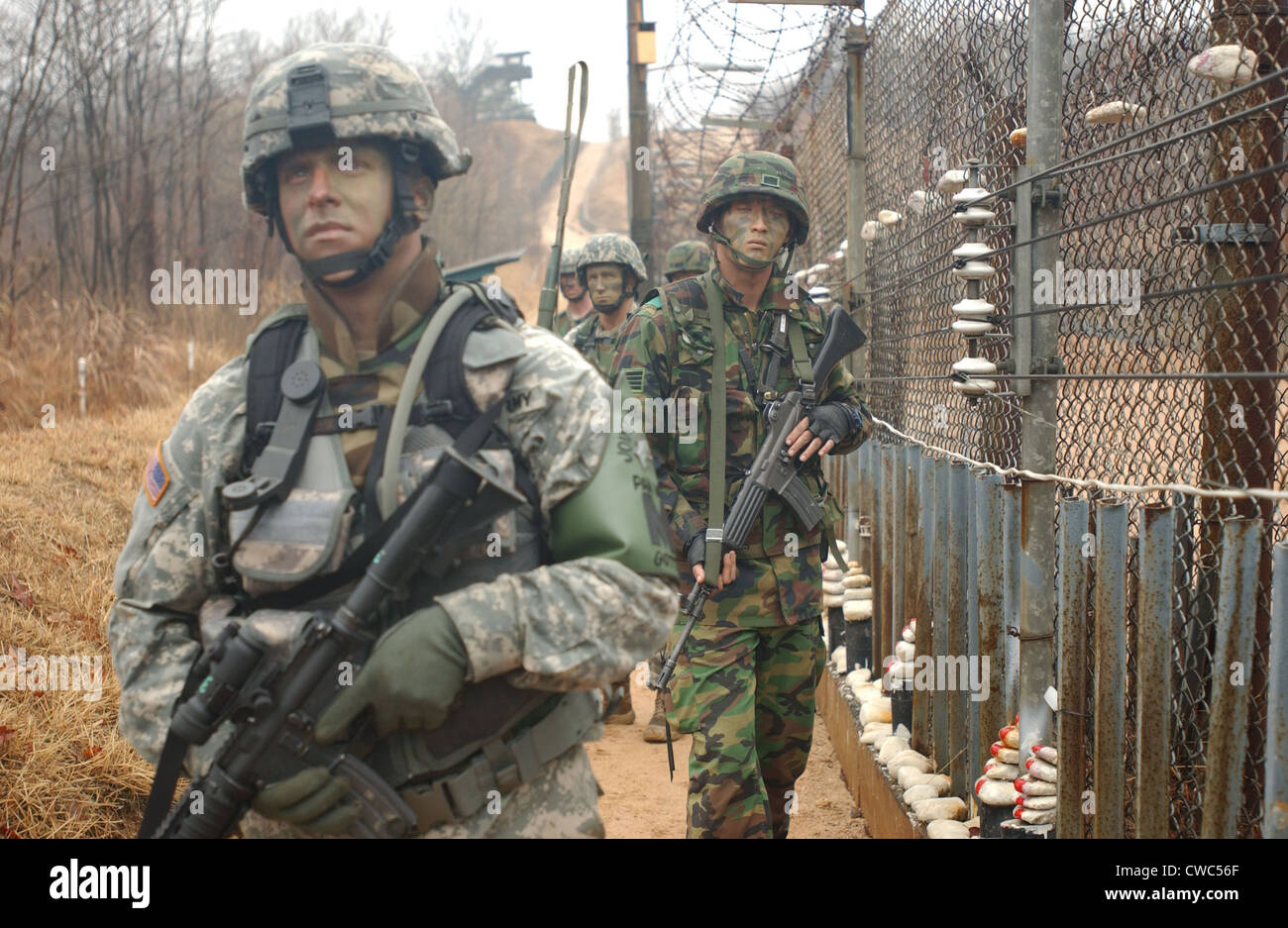
South Korea and the United States finalized the practical details of Trump's exercise-reduction order this week, cutting Ulchi Freedom Shield's active phase from 11 days to five, ending August 21 instead of the original August 27, and scrapping the drill's planned second phase entirely, the counterattack operations that were meant to follow an initial defensive phase. A Pentagon official confirmed some field-training events were cancelled outright while others were converted to simulations, insisting the changes would "preserve essential readiness and training aims, with no degradation to U.S. training objectives." South Korea's Joint Chiefs of Staff described the changes as agreed "at the suggestion of the United States," language that leaves the initiative, and the accountability for it, squarely with Washington rather than framing this as a mutual decision.
This blog's earlier coverage of Trump's original order already flagged two competing explanations analysts offered for the move, creating diplomatic space with Kim Jong Un, or trying to pull Kim away from his deepening alignment with Moscow. This week's reporting adds a third motive from Korea Economic Institute of America senior fellow Ellen Kim that arguably ties the other two together more convincingly than either explanation alone: "Trump is trying to catch three birds with one stone," pressuring Seoul over the pace of its promised investment commitments under a separate trade deal, diverting attention from ongoing U.S. difficulties in Iran, this blog's own extensive summer coverage of interceptor depletion and munitions shortfalls, and reopening a diplomatic channel to Pyongyang simultaneously. That reframes the decision less as a Korea policy choice made on its own terms and more as one lever in a considerably broader, multi-theater negotiating strategy, which fits the same transactional alliance-management pattern this blog's coverage of the U.S.-Ukraine intelligence-sharing surge documented just two days earlier, allies and adversaries alike being managed as instruments in a single, interconnected set of Trump priorities rather than through theater-specific policy logic.
North Korea's own response carries a genuinely interesting split worth reading closely. Kim Yo Jong, the North Korean leader's sister, dismissed the reduced drills as no less "provocative and aggressive" in nature despite the shorter duration, while simultaneously insisting "the relationship between the two leaders remain excellent" and that Kim Jong Un holds "fond personal memories and feelings towards Trump," a message clearly aimed at preserving the personal diplomatic channel even while rejecting the substantive claim that scaled-back drills represent genuine de-escalation. Pyongyang's official KCNA commentary the same day took a harsher line, branding the U.S. and South Korea "warmongers," but researcher Hong Min's assessment that the choice to issue a commentary rather than a senior-official statement or military show of force suggests Pyongyang is deliberately leaving room for diplomacy is a useful read, North Korea appears to be calibrating its own public response to avoid foreclosing the same in-person Trump-Kim meeting the Wall Street Journal reports Trump's aides are now actively trying to arrange, possibly timed to a November APEC trip to Shenzhen.
The timing detail this article surfaces almost in passing, Chinese Foreign Minister Wang Yi visiting Seoul for regional security talks the exact same week these cuts were finalized, deserves more weight than a passing mention. Wang's public call for Washington to change its "hostile policy" toward Pyongyang lands directly inside a week where the U.S. has visibly reduced its own military posture on the peninsula, and China's position as North Korea's only formal treaty ally gives Beijing a genuine stake in how this drill reduction, and any resulting Trump-Kim diplomacy, actually unfolds. This blog's earlier coverage of the Kuril Islands standoff and Japan's own defense white paper already established a pattern of great-power signaling clustering around the same narrow windows of opportunity in the Indo-Pacific; Wang's Seoul visit arriving in the same week as this drill announcement is consistent with that same pattern, regional powers moving quickly to shape the diplomatic space a major U.S. policy shift opens up, rather than waiting to see how it settles first.
South Korean President Lee Jae Myung's own public framing, that Ulchi Freedom Shield was always defensive and Seoul "had no intention of using them to attack North Korea," reads as a deliberate effort to avoid either escalating or undercutting the reduction, a careful middle path consistent with the defense-autonomy posture this blog's earlier Korea coverage already documented Lee pursuing independent of how Washington's own commitment level fluctuates. Neither Seoul nor Washington's own working-level officials knew about Trump's order in advance, according to South Korea's foreign minister, a detail that, more than any single strategic explanation on offer, may be the most consequential fact in this entire story: a major, multi-decade alliance commitment altered by unilateral presidential decision, discovered by the allied government's own officials only after the fact, is itself the clearest evidence yet of how personalized and improvisational Trump's approach to this specific alliance has become.

No comments:
Post a Comment