
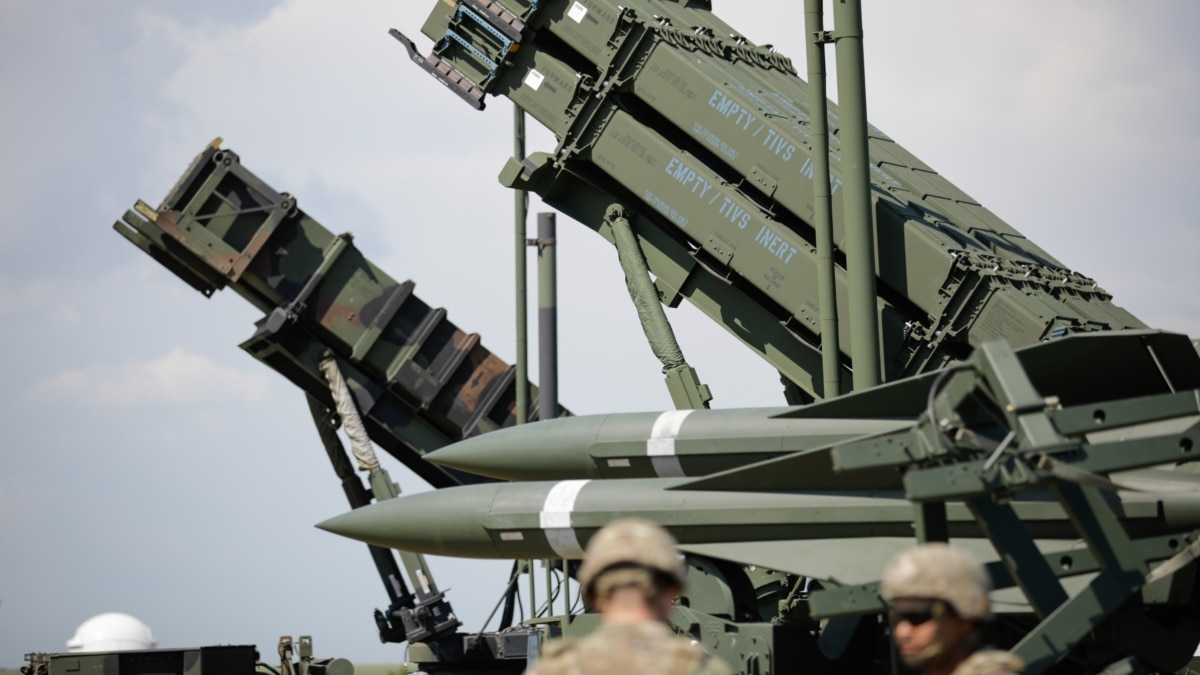
A month after President Trump pledged at the July NATO summit in Ankara to license Ukraine to produce Patriot interceptors domestically, calling it "pretty cool" and joking Kyiv could no longer complain the U.S. wasn't supplying enough, the deal has stalled into genuine ambiguity. Lockheed Martin and Raytheon have both characterized talks as "early" rather than moving toward implementation, Trump himself reversed course at a July 31 Camp David cabinet meeting, saying "we have not agreed to that," and U.S. NATO Ambassador Matthew Whitaker told Fox News on August 3 that a long-term production agreement "will not be concluded before this winter." Zelenskyy, for his part, has continued insisting the matter is settled, posting on X that the two sides have "now reached an agreement" and telling Ukrainian television over the weekend that "the decision has been made." American officials have not responded to that latest claim.
The official explanation for the delay, technology transfer and intellectual property protection concerns, is the one both defense giants are publicly offering, but a Republican Capitol Hill official's account to The Atlantic points to something considerably more commercially self-interested: the real fear isn't that Ukraine will steal Patriot technology, it's that Ukraine will improve on it and then out-produce the existing U.S. lines faster and cheaper than Lockheed and Raytheon can themselves. That's a fundamentally different concern than the one being stated publicly, and it reframes the entire hold-up as a monopoly-protection problem rather than a security one.
That framing gains real credibility once you look at what's actually happening around the licensing standoff rather than just the standoff itself. Five days after Trump's Ankara pledge, Ukraine and nine European countries launched a coalition in Paris with Eurosam, Leonardo, Thales, and Saab to field Freyja, an entirely new anti-ballistic system built around a Ukrainian-designed interceptor priced at roughly one-fifth of a Patriot round. A week after that, Lockheed itself unveiled the PAC-3 ACE at Farnborough, pricing it around $2 million a round, less than half the current PAC-3 MSE's cost, a genuinely rapid pivot for a program whose current top round took three years just to reach full-rate production after initial Army acceptance. Read together, that's not a coincidence of timing, it's Ukraine's partners and Lockheed itself both racing to field cheaper interceptors within weeks of each other, which is precisely the dynamic the Capitol Hill official described: incumbents moving defensively the moment a credible lower-cost alternative became politically live.
This entire standoff sits directly downstream of the interceptor math this blog has tracked since Lt. Gen. Rafferty's SMD Symposium disclosures. The same reporting that documents this licensing fight also states plainly that the Iran conflict drained an estimated two-thirds of America's pre-war Patriot inventory, corroborating the CSIS figures already covered here showing stocks down from roughly 2,300 to the 750-830 range. That's the backdrop against which Trump refused Zelenskyy's July 28 Oval Office request for "several hundred" interceptors, citing America's own shrunken stocks, only to publicly reverse the licensing pledge three days later. Washington is simultaneously too depleted to spare finished interceptors and apparently reluctant to let Ukraine build its own, which leaves Kyiv caught in a genuine bind regardless of which explanation, IP protection or competitive fear, actually drives the American side's hesitation.
Whether the license ultimately materializes this winter, as Whitaker suggested, or later, or not at all, the more durable story is what this standoff reveals about the structure of Western missile-defense production generally: a legacy defense-industrial model built around a small number of exquisite, expensive, slow-to-scale producers is now being challenged simultaneously from two directions, a European coalition building a genuinely competing cheaper system and a wartime partner with the demonstrated industrial capacity to build interceptors faster than the incumbents can themselves. Ukraine's weapons industry, hardened by nearly five years of full-scale war, isn't just a potential Patriot licensee at this point, it's a credible competitive threat to the two companies that have controlled ballistic missile defense production for decades, and their hesitation looks a lot less like caution about the technology and a lot more like caution about who else might soon be able to build it.

No comments:
Post a Comment