
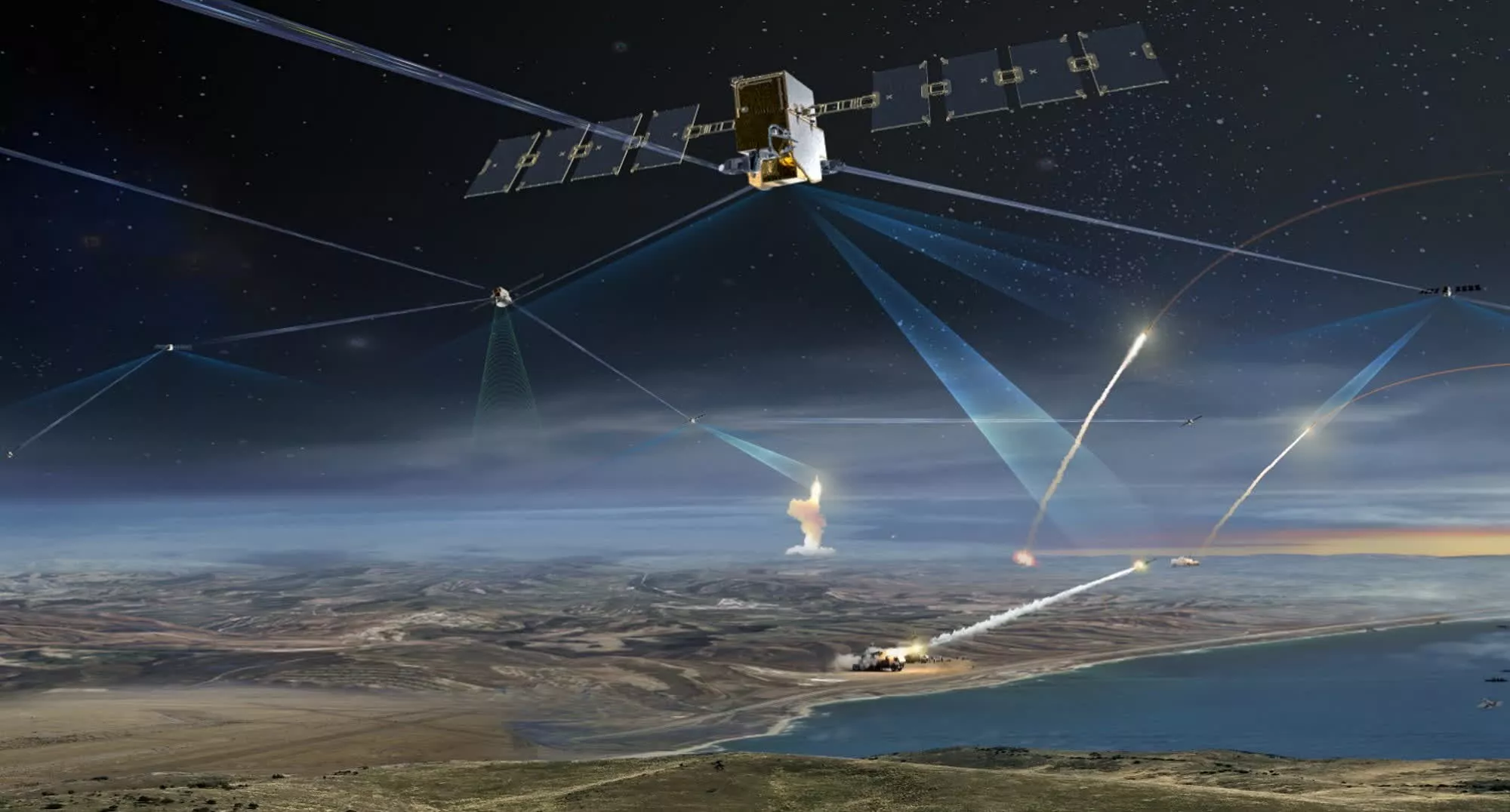
U.S. Space Force Gen. Stephen Whiting, head of U.S. Space Command, used his own address at the Space and Missile Defense Symposium in Huntsville to deliver a message considerably starker than the counter-drone and interceptor-production announcements dominating the rest of this year's conference: American satellites currently have no way to defend themselves, and Washington needs to build weapons to change that. "In space, there is no safe harbor. You can't dig a trench or build a shield," Whiting said, warning that even the most sophisticated satellites "will drop to zero" in performance on the first day of a future war if they depend on "fragile, targetable supporting infrastructure." His prescription was direct: "credible, acknowledged" kinetic and non-kinetic weapons capable of damaging or destroying an adversary's satellites, elevated to one of five priority areas SPACECOM wants funded and fielded between 2029 and 2033.
The capability gap Whiting described is real and well-documented independent of his own framing. China conducted its first successful direct-ascent anti-satellite missile test in 2007, destroying an inactive weather satellite at roughly 530 miles altitude, and has since developed the SC-19 system along with satellites capable of physically grappling and repositioning other spacecraft, what Whiting's predecessor, Gen. Chance Saltzman, previously described as ground-based lasers already powerful enough to disrupt or degrade satellite sensors, with structural-damage-capable versions expected by the mid-to-late 2020s. Russia has separately conducted multiple tests of its Nudol direct-ascent interceptor, including a successful destructive intercept in 2021, and has deployed so-called "nesting doll" satellites that shadow high-value American spacecraft. Against that list, the only anti-satellite capability the U.S. has publicly acknowledged is the Counter Communications System, a ground-based jammer that disrupts satellite communications rather than physically threatening a spacecraft, a considerably narrower toolkit than what Beijing and Moscow have already tested and, in Russia's case, used destructively.
What Whiting's speech doesn't address directly, and what makes this story more complicated than a straightforward capability gap, is that the U.S. isn't simply behind on this technology, it's operating under a restriction it voluntarily imposed on itself. The Biden administration announced a self-imposed moratorium on destructive direct-ascent anti-satellite weapons testing in 2022, a policy grounded in the debris-field risk such tests create in low Earth orbit, the exact kind of hazard China's 2007 test itself generated, debris that continues threatening satellites of every nation, including America's own, nearly two decades later. Whiting's call for "credible, acknowledged" offensive space weapons sits directly in tension with that moratorium, since credibly demonstrating a destructive capability is difficult to reconcile with a policy specifically designed to avoid the kind of test that would prove it works. Whether SPACECOM's 2029-2033 roadmap implies formally abandoning that moratorium, working around it through non-destructive kinetic options, or leaning harder into the non-kinetic half of the "integrated space fires" concept, jamming, lasers, cyber, remains genuinely unclear from Whiting's public remarks, and it's a policy question with real diplomatic and debris-safety consequences that a pure capability-gap framing tends to obscure.
This speech also connects directly to the broader SMD Symposium throughline this blog has tracked across multiple posts from the same week, Rafferty's interceptor-depletion disclosures, VanHerck's authority-gap warnings on the Kuwait F-5 raid and Langley drone incursions, and Dodd's push for airborne directed energy weapons. Whiting's fifth priority area, sustained space maneuver, echoes the same "husbanding scarce resources versus actually fighting" tension running through nearly every other SMD announcement this year: he described satellites currently limited by launch fuel as suffering from "a psychology of scarcity" that "overrides desired warfighting maneuvers," a direct orbital analog to ground-based interceptor batteries rationing scarce Patriot rounds against Iranian drone swarms. Even the specific vulnerability he's most concerned about, proliferated low-Earth-orbit constellations capable of finding, fixing, tracking, and targeting U.S. forces, mirrors the same detection-versus-defeat problem this blog covered in the context of China's GPS-independent hypersonic guidance research and its direct implications for Golden Dome's tracking assumptions.
Taken together, the picture emerging from this year's SMD Symposium isn't really five or six unrelated announcements, it's a single institution-wide realization playing out across every domain simultaneously: air, land, sea, and now space, all discovering in the same eighteen-month stretch that a defense architecture built around scarce, exquisite, defensively-postured assets doesn't survive contact with adversaries willing to contest every layer at once. Whiting's speech simply makes explicit, for the orbital domain, the argument this blog has been tracing everywhere else, survivability increasingly means the ability to shoot back, not just the ability to endure.

No comments:
Post a Comment