
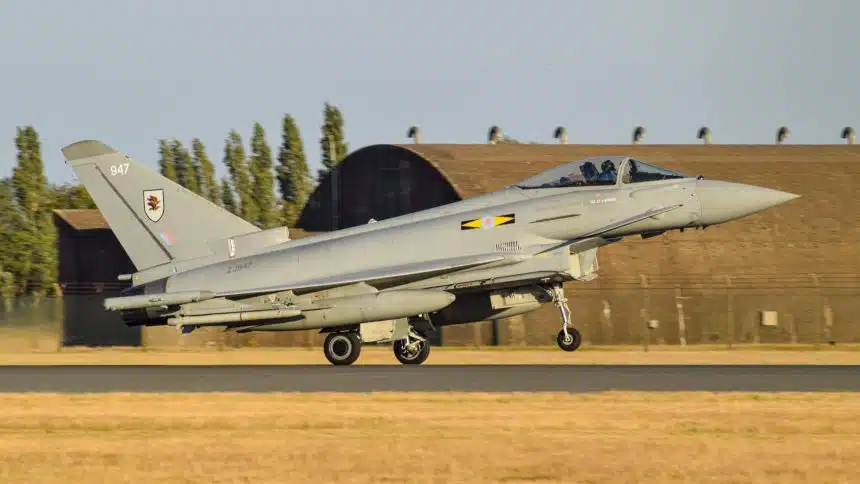
A routine Friday evening flight turned into a high-stakes security operation after a hoax bomb threat directed at a Qatar Airways aircraft triggered the launch of Royal Air Force Quick Reaction Alert (QRA) fighters, as detailed in recent reporting by The Aviationist.
According to details released by Greater Manchester Police and civil aviation authorities, the threat was received by National Air Traffic Services (NATS) at approximately 18:00 BST. Recognizing the potential danger, civil authorities coordinated an immediate emergency response with the Ministry of Defence and airport officials.
Eyewitnesses on the ground captured striking footage of the interception, tracking the thick contrails of the widebody airliner flanked by the twin streams of the escorting fighter jets.
Swift investigative work by Greater Manchester Police quickly traced the origin of the alert, revealing it to be a malicious fabrication.
The incident highlights the well-rehearsed protocols governing European airspace defense, where QRA assets remain on perpetual standby to address unexpected airborne emergencies. While standard military intercepts of commercial airliners more frequently occur due to lost communications or transponder anomalies, the deployment of armed fighters to counter a suspected security breach underscores the persistent vigilance required by modern civil-military aviation networks.

No comments:
Post a Comment