
On March 1, an Iranian drone hit a tactical operations center near Camp Arifjan in Kuwait, evading the base's air defenses entirely and killing six American service members. That's the kind of failure a new Air Force solicitation is explicitly trying to prevent from happening again, and its answer isn't a better fixed radar system or a bigger missile battery. It's turning the cargo planes that already fly into these bases into the base's own bodyguards.
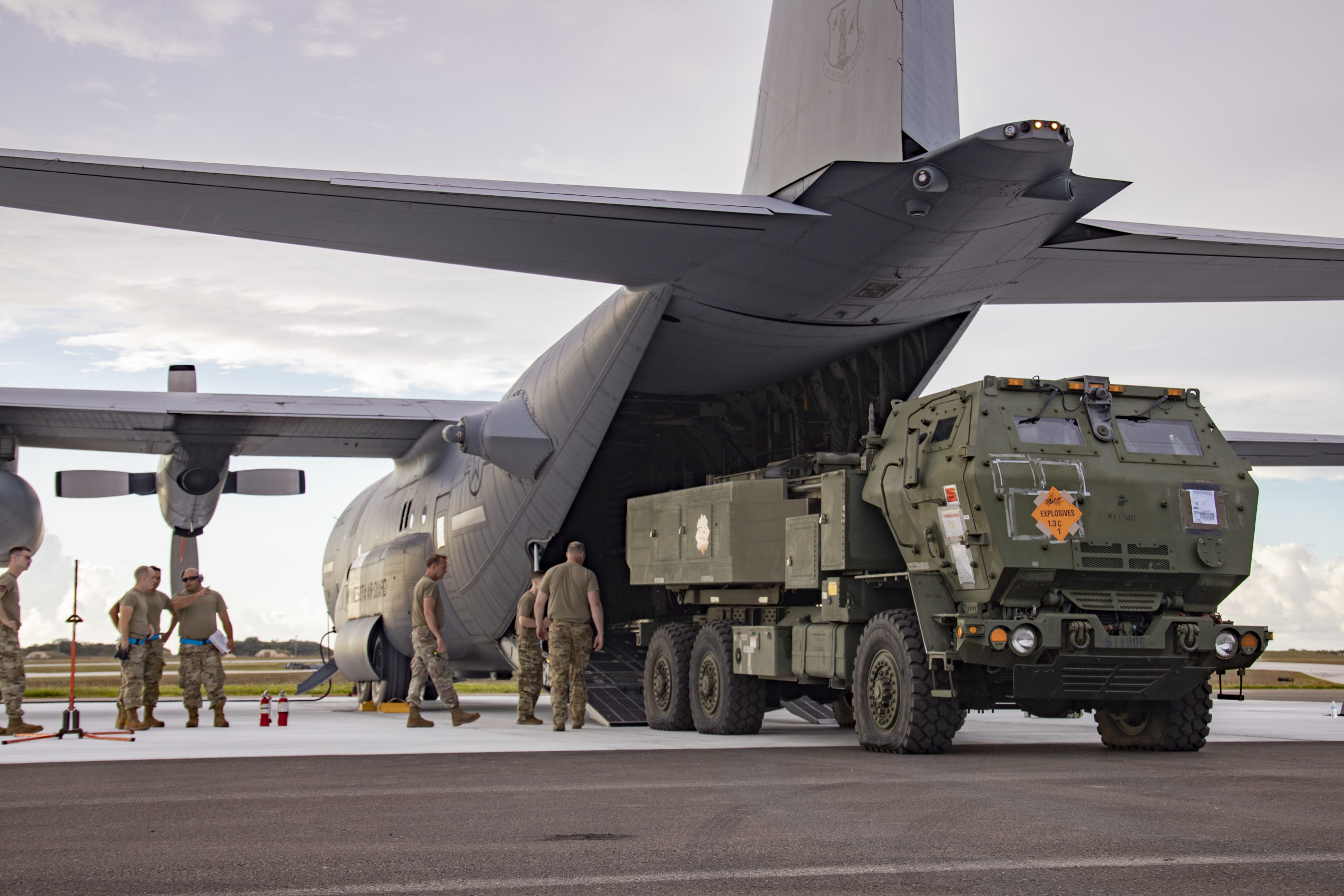
The idea, laid out in a Small Business Innovation Research solicitation with an October 21 deadline, is a two-for-one conversion. Transport aircraft would double as high-altitude "motherships," carrying their own onboard intelligence, surveillance, and reconnaissance drones the way DARPA demonstrated back in 2021 when a C-130 recovered a small X-61 Gremlin drone mid-air. Then, once on the ground, those same transports would deploy a swarm of AI-controlled drones that autonomously defend the base and everything parked on it, without needing a dedicated, pre-positioned air-defense unit already sitting there. The Air Force's own language calls it turning cargo planes into "adaptive, force-multiplying launch platforms."
What's genuinely telling is how the Air Force is running this contract. Government innovation funding normally starts with a Phase I feasibility study before moving to Phase II development. This solicitation skips straight to Phase II, and the Air Force said so explicitly: coordinating multiple drones through AI "has already been established by the private sector," so there's no need to re-prove the basic concept works. That's the service betting real money on the idea that autonomous drone-swarm coordination is now mature commercial technology, not an open research question, which is a meaningfully different posture than most military procurement takes toward emerging tech.
This program doesn't exist in isolation, it's the latest piece of a base-defense buildout that's been accelerating hard for over a year. The Air Force is seeking roughly a fivefold funding increase for its Air Base Air Defense Systems program, driven partly by the windfall from this year's tax-and-spending package and partly by Ukraine's June 2026 drone strike deep inside Russian air bases, an attack that CSIS analyst Masao Dahlgren pointed to as proof that fixed installations are "incredibly vulnerable" regardless of how far from the front line they sit. The service has also stood up its first rapidly deployable Point Defense Flights, small teams of roughly 20 enlisted Airmen trained specifically to bring portable counter-drone kits, sensor, effector, and command-and-control bundled into one deployable package, downrange on short notice.
The Port Shuaiba attack is the reason all of this urgency is warranted rather than theoretical. NORTHCOM's own leadership has been blunt about the gap: deputy commander Lt. Gen. Joseph Jarrard told a missile defense symposium in August that some American locations have "neither the sensors to detect an incoming drone swarm nor the effectors to stop it," and former NORAD commander Gen. Glen VanHerck separately warned the country isn't prepared to stop a comparable swarm attack launched from domestic soil. A small, commercially available drone can be bought, driven to a launch point, and airborne within minutes, collapsing the warning time a traditional missile or aircraft attack would normally allow. That's precisely the vulnerability that let a single drone reach a tactical operations center in Kuwait and kill six people in March, and it's exactly the gap this cargo-plane-turned-mothership concept is trying to close before the next base finds out the hard way that its own air defenses have the same blind spot.

No comments:
Post a Comment