
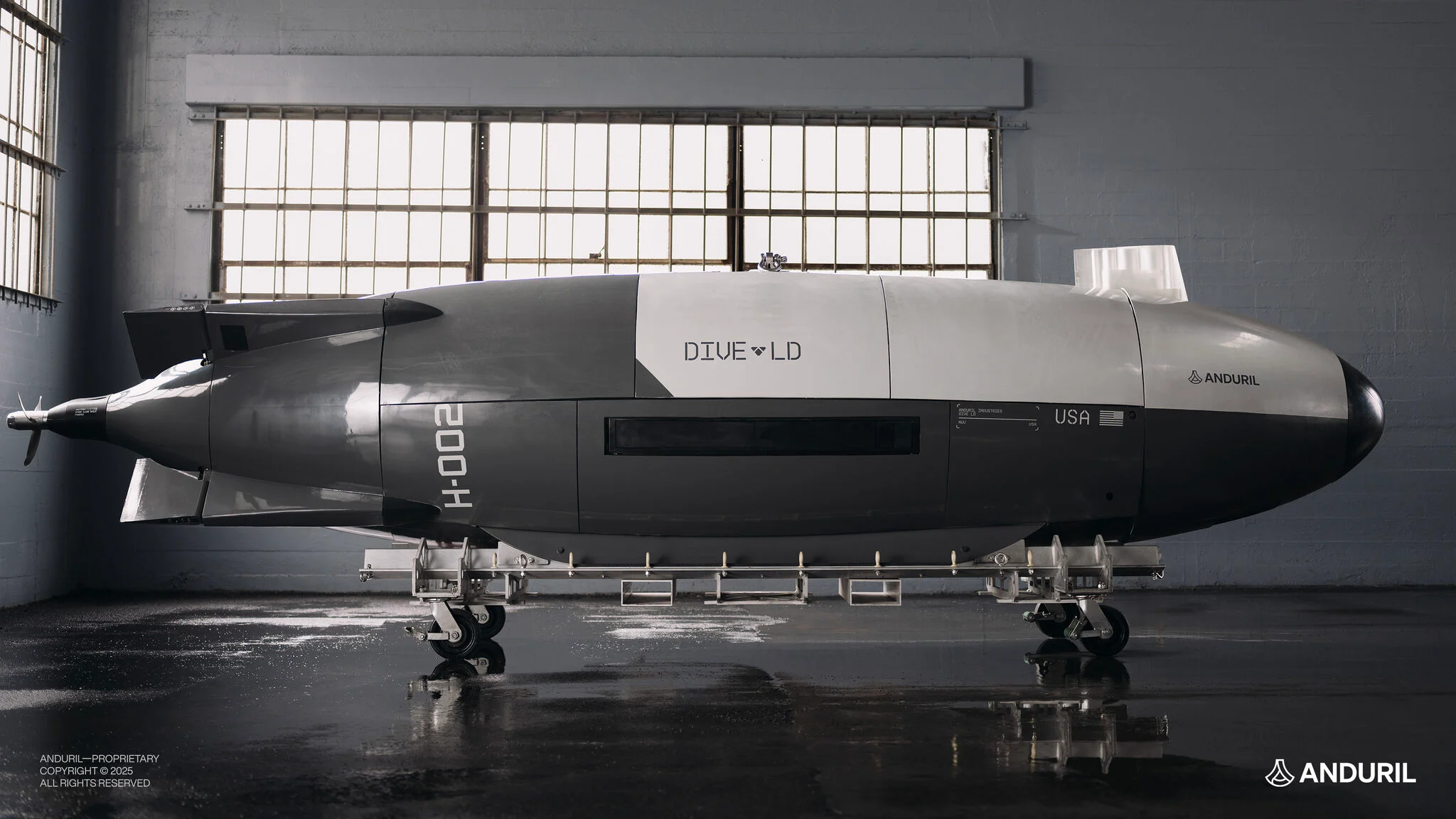
Two governments, two completely different stories about the same 19-foot drone. Iran's Revolutionary Guards announced Tuesday they'd pulled off "a complex intelligence and field operation," trapping "one of the most modern, intelligent and unmanned submarines of the terrorist American army" at the entrance to the Strait of Hormuz. The Pentagon's response arrived within hours and cut the drama down to a maintenance report: the drone "malfunctioned more than a day ago," an older model that "neither collected sensitive data nor carried any classified sonar or radar equipment." Reuters said it couldn't independently verify Iran's version, and the Pentagon never directly addressed Iran's claim of an active operation at all.
The hardware itself is real regardless of which story is closer to true. Iranian state media identified it as a Dive-LD, an autonomous underwater vehicle built by Anduril and delivered to the Navy's Unmanned Undersea Vehicle Group 1 in 2025. Anduril's own marketing describes it as built for mine countermeasures, seabed mapping, intelligence gathering, and inspecting underwater infrastructure like cables and pipelines, work that would plausibly put a drone like this exactly where Iran says it found one, near the mouth of a strait Tehran has kept under blockade since the war broke out in late February. Photos released by Iran's Sepahnews show the drone laid out on land, and it's a genuinely unglamorous-looking piece of hardware for all the language wrapped around it.
Whether Iran actually "captured" an operational American asset or simply recovered a drone that had already died on its own is the real question here, and it matters beyond bragging rights. If the Pentagon's account is accurate, this is basically routine, unmanned systems break down, drift, or lose power, and a broken drone floating near a hostile coastline eventually washes up somewhere. If Iran's account is closer to accurate, an active intelligence and mine-detection asset getting seized intact by the IRGC Navy is a genuine capability loss and a propaganda win Tehran clearly wants to milk, hence the promise of forthcoming images before those images had even been released.
The Pentagon's specific defense, that the drone was "an older model" carrying no classified sonar or radar gear, reads like language chosen carefully to minimize what Iran gets out of examining it, whatever actually happened operationally. That's a normal thing for any military to say after losing equipment to an adversary, and it doesn't resolve the dispute so much as manage the damage from it.
This lands inside a broader pattern of contested claims that's defined the entire Hormuz campaign since March. The same day, Iran's army separately claimed to have shot down a US MQ-1 drone over the strait using what it called a new advanced air defense system, another assertion sitting entirely on Iranian state media's own account with no independent confirmation offered. Both claims, the sub and the drone, follow the same shape this conflict has settled into: Iran announces a battlefield success in detailed, confident language, and the American response either stays quiet or reframes the incident as considerably less significant than Tehran's version. Neither side has much incentive to hand the other side the more embarrassing story, which is exactly why an outside observer is left with two accounts that can't really both be complete.

No comments:
Post a Comment