
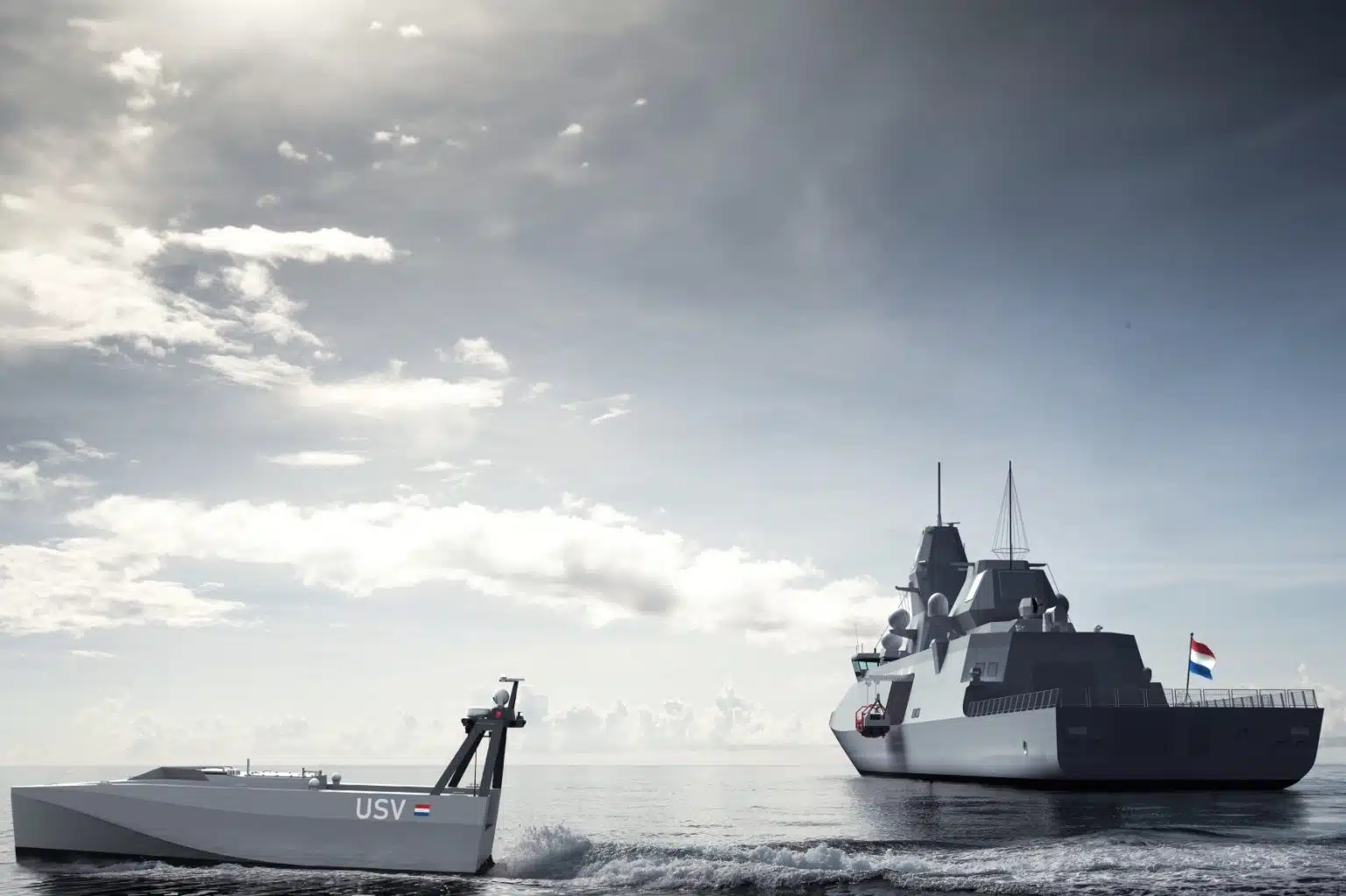
The Dutch Ministry of Defence, acting through its Materiel and IT Command (COMMIT), has formally commissioned Dutch Naval Design (DND) to initiate the development phase for a specialized 12-meter uncrewed surface vessel (USV).
Developed under the collaborative framework of the "USV Alliance"—a specialized consortium uniting defense leadership, industrial partners, and academic research institutions—the prototype design phase is slated for completion in early 2027. The uncrewed craft will be engineered to fit seamlessly inside the frigate’s mission bay and deploy via an internal cradle system.
The integration of the Compact FLASH sonar onto an offboard surface drone represents a major doctrinal shift in distributed maritime surveillance.
Beyond passive and active target acquisition, the autonomous vessels are intended to serve as persistent forward-deployed sentinels capable of tracking underwater contacts and enforcing maritime deterrence in high-traffic choke points. By shifting high-risk acoustic localization duties away from crewed platforms and mitigating the endurance limits of traditional aviation assets, the USVs will dramatically optimize operational efficiency across the entire multi-national frigate program.
Ultimately, this milestone highlights the accelerating integration of unmanned systems into high-end European naval architecture. As the USV Alliance moves from baseline design toward prototype manufacturing and sea trials, the successful deployment of autonomous submarine-hunters will serve as a foundational pillar for future allied anti-submarine operations in contested waters.

No comments:
Post a Comment