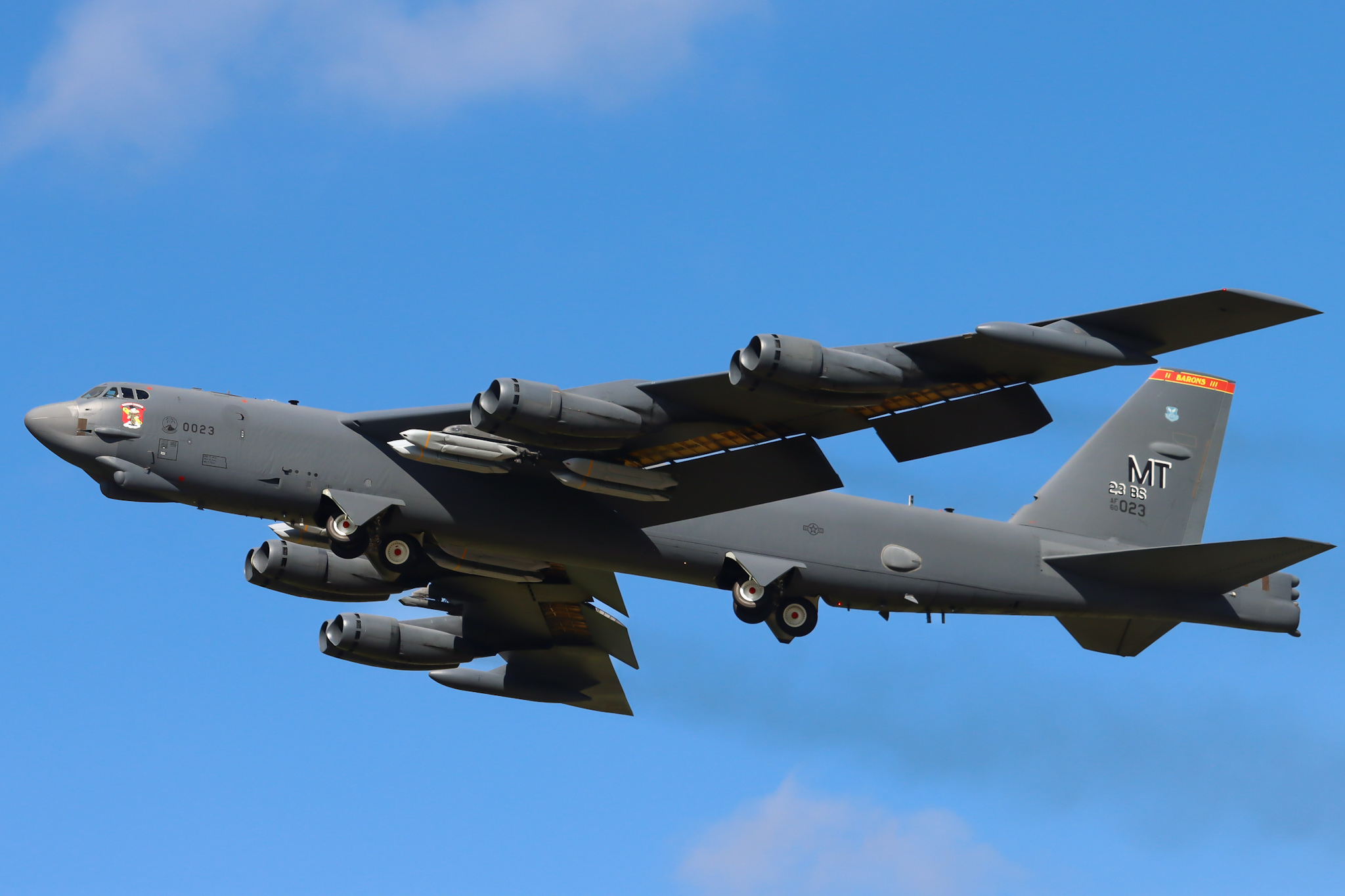
A sweeping new assessment released by the Government Accountability Office (GAO) has delivered a sharp warning regarding the U.S. Air Force’s multi-billion-dollar effort to modernize its aging fleet of B-52H Stratofortress bombers. As the service attempts to keep the Eisenhower-era aircraft flying through the 2050s—pushing the iconic bomber's operational lifespan toward a historic century of service—the watchdog report reveals that 10 of the 13 major modernization programs are struggling with significant performance challenges, ballooning budgets, and severe schedule slippages.
At the center of the watchdog's concerns is the Commercial Engine Replacement Program (CERP), the fleet's single most expensive overhaul. The initiative, which swaps out the bomber's legacy Pratt & Whitney TF33 engines for modern, fuel-efficient Rolls-Royce F130 turbofans, has seen its projected price tag swell to $15.4 billion. More critically, the GAO warns that the Air Force's current strategy relies on starting engine and subsystem production concurrently with developmental flight testing—a high-risk approach adopted to make up for lost time. With developmental flight testing pushed back to early fiscal 2029 (four years behind original projections) and initial operational capability delayed to 2033, auditors caution that building engines before ironing out flight test data risks expensive, time-consuming retrofits down the line.
Parallel struggles plague the Radar Modernization Program (RMP), which is tasked with replacing the B-52's vintage avionics with a new active electronically scanned array (AESA) radar. Driven by design complications, contractor hurdles, and installation complexities, the radar upgrade's budget has ballooned by over 30 percent to $2.9 billion, a spike that previously triggered a formal Nunn-McCurdy statutory cost breach. To contain further financial bleed, program officials were forced to scale back five of the radar's original performance metrics to establish a "minimum viable product," raising concerns that the service is paying significantly more while accepting degraded baseline capabilities.
Compounding these hardware and fiscal bottlenecks are systemic maintenance and logistics vulnerabilities across the active inventory of 75 strategic airframes. The GAO highlighted that the B-52 fleet continues to suffer from depressed mission-capable rates—dipping below 54 percent in recent years—exacerbated by obsolete components, dwindling manufacturer support, and a reliance on cannibalizing retired airframes for spare parts. Furthermore, depot maintenance schedules currently assume that engine upgrades will proceed precisely on time, leaving virtually no margin for error should CERP face further setbacks.
To mitigate these cascading risks, the GAO has formally recommended that the Air Force delay its official CERP production decision until a comprehensive risk-and-cost analysis is completed, while urging broader adoption of digital engineering tools and updated sustainment planning. While Air Force leadership maintains that these calculated risks are necessary to preserve the B-52's status as an enduring pillar of the nation's nuclear and conventional standoff triad, the audit underscores the immense industrial friction involved in keeping a 1950s weapons platform viable for modern high-end warfare.


No comments:
Post a Comment