
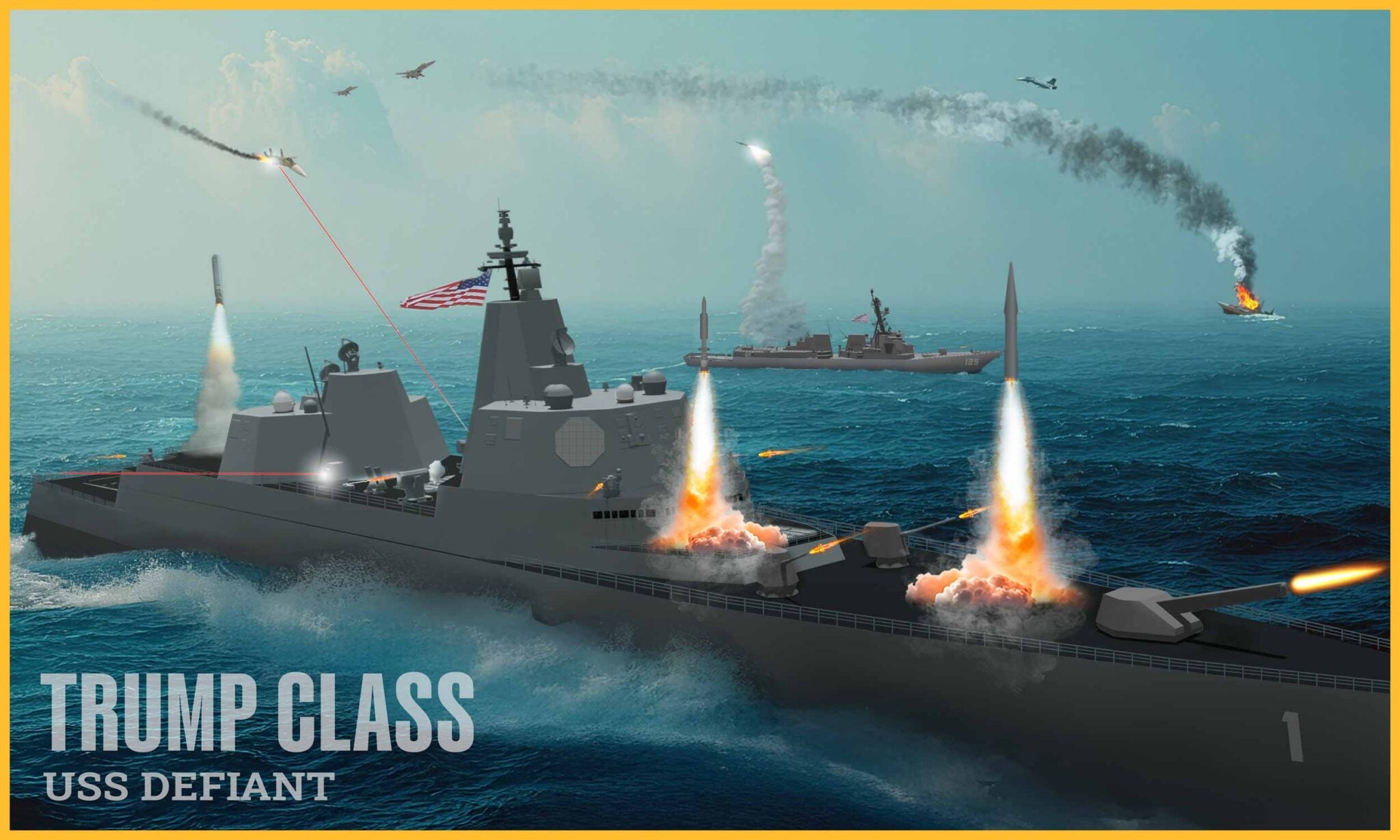
Lyle Goldstein's Defense News opinion piece surfaces a genuinely interesting document, an August 21 assessment from China National Defense News, an official PLA publication, walking through the proposed Trump-class battleship line by line. What makes it worth reading isn't that Chinese analysts found flaws, Western critics have found plenty of the same ones, it's the conclusion Goldstein draws from the tone of the whole thing: at least some Chinese strategists appear to want the U.S. Navy to actually build this.
The numbers the PLA article cites track closely with what American critics have already published. Fifteen ships planned between 2028 and 2056, a total program cost of $275 billion, a lead ship priced at $23.4 billion, and a nuclear propulsion switch the analysis says adds 55 percent to the cost, before, as the Chinese report itself points out, accounting for nuclear waste disposal and eventual dismantling once the ships retire. The PLA writers flag "unfinalized designs and insufficient technological maturity" as a real risk, citing the Zumwalt-class destroyer and Littoral Combat Ship as cautionary examples of exactly this "build the platform first, install equipment later" approach going wrong. None of that requires Chinese intelligence sources, it's the same critique CBO's own report and plenty of American defense commentators have already made.
What's more specific to a Chinese vantage point is the doctrinal argument buried further in. The article notes, correctly, that a battleship concentrating firepower into a small number of heavily armed hulls runs directly against Distributed Maritime Operations, the doctrine the U.S. Navy has spent years building around spreading detection, command, and strike capability across many smaller, networked platforms specifically so damage to any single node doesn't cripple the whole formation. A battleship is the opposite bet, concentrated value in fewer, harder-to-replace ships, and the PLA analysts seem to understand that tension better than a lot of the domestic American coverage has bothered to spell out. They also raise the obvious modern threat picture, quiet submarines, hypersonic missiles, drone swarms, all of which have gotten measurably better at finding and killing large surface ships in the years since anyone last seriously built a battleship.
The detail that actually justifies Goldstein's framing, though, is the shipbuilding capacity argument near the end of the Chinese piece. It notes that leading American shipyards are running average delays of five years, with delivery cycles that have stretched from roughly five years in the early 2000s to about eleven years today, and warns that building nuclear-powered battleships "could further slow the construction of aircraft carriers and submarines." That's not a criticism aimed at the battleship concept in isolation, it's an observation that committing scarce shipyard capacity to an unproven, expensive, doctrinally questionable program would come directly at the expense of the carrier and submarine programs actually driving the Asia-Pacific naval balance. A PLA analyst pointing that out isn't offering friendly advice.
Goldstein's own closing argument is worth taking seriously independent of the Chinese analysis: that the U.S. Navy would be better served leaning into its actual strengths, undersea warfare and drones, and adopting a "less high-profile role for surface combatants" that fits a multipolar world where expensive presence missions matter less than cost-effective hedging. That's a defensible position, and it's one plenty of American strategists hold too. But it's worth being honest about what the PLA article actually demonstrates either way: whether or not the battleship ever gets built, Chinese military analysts are reading America's own defense debates in real time, cross-referencing them against CBO reports and shipyard delivery data, and drawing conclusions about which American choices would help Beijing most. That's not new. What's genuinely worth noting is how transparently, in this instance, that calculation shows through in an official PLA paper's own language.

No comments:
Post a Comment